Click any timestamp to jump to that part of the video
So, well, thank you for coming. Yeah. Well, thanks. I'm sorry it's taken me a while to get out here, but while you're here, look forward to the dialogue. Yeah. Yeah, absolutely. Um, how do we want to kick this off? Do do you have any like uh anything in all of your years and in being in this field that you would really want all of us to know? That comes up a lot. Um, I guess the thing I've been sort of impressed with and I was just having a discussion with I don't know how many of you know Charlie Evil, but Charlie's written extensively about her written several books with on a wall and it's um it shouldn't be much of a surprise to people in the room, but the lack of real knowledge about herpes and counseling that's available. So even though I think we understand more about herpes viruses and the natural history of disease now than what we ever have, I actually feel we've taken a step back in terms of support um ability to get tested and proper counseling. Um you know the push from pharmaceutical companies to develop new drugs I think is less than what it had been. Uh and so I get a sense of growing frustration. So, I just want to acknowledge folks here that I hear you. Um, and that's a message that a lot of us who work in the field continue to bring forth to national leaders and we're going to work on trying to bring it to the forefront. ...
... We do have uh the what would be I guess by the time it comes out be 2014, but the uh 204 STD treatment guidelines we're meeting in two weeks. There's a whole section on herpes that will be rewritten. Um, I'm hoping we step up some of the counseling message. I haven't seen what Anna Wald has put together yet, but I'm in that track where we sit at these things and I'll be happy to come back to give you a heads up where things are going because it'll take six months or a year for that to actually come out. Um, bottom line is that um there is some encouraging things. I think our understanding of the disease is such that we know much better about um why we see transmission, why the current therapies work the way they do and why there are limitations around that. And um there's hope um that we'll have a vaccine at least uh from a therapeutic standpoint um maybe in the next 5 to 10 years, which isn't right around the bench, but given I think where we've been um that's encouraging. So, so this vaccine, it it won't ne it won't stop us from having outbreaks, but it will stop it from spreading, right? Well, hopefully it would do both. Um, I think the goal right now is um I think people probably feel it may be easier to develop a vaccine that would be um help control the disease rather than actually prevent infection. ...
... And by controlling the disease, we'd be looking at both in terms of outbreaks as well as shedding and and transmission. So ideally you'd have a vaccine that people could get that would actually prevent shedding. I mean that would be the goal. You would develop sort of neutralizing antibodies and um a TE-C cell specific response that would actually allow you to be able to say you know I have antibodies. The virus is in the dorsal ganglen latent but I've got a way of actually making sure that I clear it and it's well controlled and and that's the hope. Um and I you know we had a NIH workshop um might have been five months ago just to sort of reinvigorate the whole thing and Tony Fouchy was there. He's the head of uh you know the National Center for Infectious Diseases and HIV at NIH. And so for him to be there obviously means that there's tension and we wanted to make sure that people understood that this was still a priority. Um there's a lot of new companies that are working on phase one and phase two trials of vaccine. So I think we don't have anything that's right there. Um but there is work going on and there's reason to be hopeful that we'll have something down the road. ...
... Yeah. And that's great on one hand and then I I think probably in in some of our minds it's like oh okay cool. So I'll just wait 5 to 10 years to to have sex. Right. So, so there's like there's there's kind of two two sides to the coin here, you know, where we get to hold out hope that there might be a vaccine and who knows, maybe these will fall through. Worst case scenario, we're not going to have one, right? Not to put our lives on hold until something like this comes around. Well, I think that's actually critical. So, I I'm still constantly evolving in my thought process, I hope we get into some dialogue because um when I talk to people who live with HIV and people who've lived with it for a while, uh what I hear from many, not all, is it doesn't dominate their life anymore. That they feel like they can stay on top of it. Although it's still not clear how do you cross that bridge when you first get involved in a relationship with someone in terms of discussing it and how much you share and what their reaction is going to be. But but the good news is that we actually can control infection. Uh we can take lots of steps to reduce transmission. Um and if we can reduce some of the stigma associated with the disease, we could go a long way to actually removing a lot of the burden I think that people carry with it. ...
... And I'm not minimizing the stigma. I think we have to come up with better ways to sort of get information out there and remove stigma at the same time. That's a two-edged sword because the more you sort of talk about it, in some ways it's easier to marginalize folks. And if you don't have any discussion about it, you actually create more stigma because nobody knows what to do with it. How how would you say it would be a good way to reduce stigma culturewide? Well, it's a big question. Yeah. Uh I think by having open dialogue about it I think um about 10 years ago we had a outbreak on the UNCC well it wasn't just the UNCC campus statewide on our college campuses for HIV among young black MSM. So I met with um Professor Stone who was at the time in the school of journalism there sex with men. Oh, sorry if I throw an acronym. Stop it. Yeah. Um, and we were concerned about going that this information would get out. How do we not further marginalize gay men, gay, black men who are in the community and um he said something that still stuck with me this day. He said, "Well, you've got to bring it out into the light. ...
... The only way you remove stigma is by actually going there and talking about it." So part of what we have to do is raise the agenda, have more groups like this, and hopefully get information out where people are willing to talk about it openly. The hard part is when you're the first person out there doing it, it's, you know, it's scary as hell and you never know how people going to respond to it. But if we could get more national coverage, if we could get uh the CDC behind doing a lot more education and talking about this, about how common it is, how um it's not a lethal disease for for adults, um and that it's something you can live with, um we could get past that. Um we haven't been very successful. Yeah, we haven't been very successful in getting traction on that but I think having websites and good information out there is is necessary first step. Uh I think one of the big things that that has changed over the last 5 to 10 years is our understanding about the frequency of what we call asymptomatic shedding. So we now view herpes as a spectrum disease um and spectrum infection rather not disease. Disease tends to focus on outbreaks and yet what we understand is um that it varies from person to person. ...
... Um the expression of infection varies over the course of your lifetime depending on how long you've been infected, how old you are, your immune status. And what we know is that this is actually a virus that you never get rid of. I mean, there's eight human herpes viruses. You never clear any of them. So, you've had chickenpox, guess what? You still have that virus. You had CMV, you still have that virus. You've had monucleiosis due to Epstein bar virus, you still have that virus. So, we don't clear we think herpes viruses. What's different about herpes simplex and where our understanding has evolved is that it's almost one of chronic activation meaning once you get infection, it starts at the skin surface mucosal tract. It moves retrograde up the central nerve ganglen then sets up shock outside of the spinal cord in the ganglen and bore replication is pretty much ongoing. So you're looking at continual continuous replication of the virus with virus moving down the central nerve ganglen and then crossing over and infecting the mucosal cells there. Your ability to clear it is what prevents you from having outbreaks. So everybody who's infected has immune cells that sort of sit there at this surface between the skin, the mucosa, and where the sensory nerve ganglen is. ...
... And you remove virus sort of as it's shed, you clear it. So, if there's anything that activates viral replication so that you're shedding more virus or if there's something that affects your immunity so that you're not able to clear it as well, then you wind up having prolonged episodes of shedding that's not cleared and you get an outbreak. Um, and so when you look at what we call asymptomatic shedding, that was basically based on studies that were done taking swabs of the surface of the skin and looking for the HSV DNA in the absence of any signs or symptoms or lesions. So, no sores, no ulcers. It turns out that you could find it. And a lot of the studies that were done um were done with once a day swaps. And what they found was that about 70% of the time or so when a person is shedding virus, they're shedding it asymptomatically, meaning without any outbreaks. And that results in most of the transmission events that we see because it's much more common than the outbreaks themselves. So based on once a day swabbing with a very sensitive assay looking for the viral DNA, we thought 15 to 20% of days or 5 to 20% of days a person will shed virus. ...
... So if you look at a year, you're looking at 5% to 20%. It didn't seem to matter how often you had outbreaks, it didn't correlate much with shedding. But then there were studies that were done people pretty motivated swabbing the general tracts again out of Seattle once and not once a day but twice a day and then there were studies looking at every six hours. What they found was actually that about half of the episodes of shedding asymptomatically lasts less than 12 hours. So what you find out is that there's sort of small leakage of virus across the sensory nerve gangland. It doesn't get cleared and you can find virus if you do enough swabbing you can find it there intermittently throughout the day and we begin to understand that this is one of constant shedding then you can understand then why does the epidemiology show that most people when they transmit transmit when they don't have an outbreak and why is it if you take a drug every day you can't completely shut down viral replication why then you might not be able to prevent transmission entirely by taking a cycle of vera cycle of your daily because unless you completely shut off our replication, you're going to shed. So understanding that that sort of shifted our understanding to say okay so there's almost one a chronic inflammation of the mucosal tract which is why people with herpes simplex 2 infection the general tract have a slight increased risk of acquiring HIV. ...
... Um and why you can shed virus and transmit any time. Um, it also begins to explain why we saw drug trials where people were taking meds daily to suppress viral replication didn't have any real impact on HIV acquisition or transmission. But but to to actually take daily suppressive therapy that decreases it by half, right? Decreases. So in terms of Right. So in terms of transmission, I think um there's a couple different ways of thinking about that. A when I counsel people a lot of times I I think people think, well, I have herpes and you just got to tell me that I basically shed all the time. That means there's 100% there's a 100% chance I'm going to transmit this virus to somebody else and you go, "No, actually not." So we don't know what the inoculum size is from adults to adults. There's some studies that have been done looking at, you know, correlation with the amount of virus shed in the genital tract and transmission from mother to infant during a birth canal. So more virus, more risk of transmission. So I can't tell you, well, you know, like with HIV, we know how much virus is in the blood correlates well with what the risk of transmission. ...
... We don't have that sort of thing for herpes. But what you can say is you look at transmission studies and what we call discordant couples. Um and the classic one was actually now done over 20 years ago which they found the transmission rate. Explain what that means. So discordant means you've got one person who has herpes due to HSV2 herpes simplex 2 one person who does not and then they had sex and they did not have sex when they're having outbreak. That was about it. The transmission rate over the course of a year was about 8% per year. Meaning there was a 92% chance that the other person did not acquire herpes from their partner over the course of a year. So first of all it ain't 100% it's under you know 10% in terms of the risk. When you begin to frame it as actually most of the time transmission doesn't occur, then when you start talking about taking steps that might reduce transmission by half or by a third, you begin to say, well, wait a minute. So, we go from 8% down to 4%. So, taking daily suppressive therapy, we know reduces the risk of transmission by half. So, in the study that was done, they actually had a lower transmission rate in this trial. We looked at again couples in which one person had herpes, the other one did not. ...
... And the overall transmission rate over the course of that study in people that were not taking daily meds was about 6%, four to 6%. So it was actually lower than what we saw in some of the other trials. Part of that had to do with the fact that to enroll couples that have been together for a while and the median duration of relationships like two years in which one person had herpes, the other one didn't, you probably selected people who don't transmit very well or the other person isn't likely to get infected. So you biased it to less transmission. But the flip side is that um it still reduced transmission in half. In addition, that study looking at reducing transmission in half, it wasn't comparing taking drug every day to doing nothing. It was basically looking at taking drug every day compared to doing all the things that we've always have said, not always, but for many years now that you said glasses, right? Abstain from having sex when you're having an outbreak. Disclose your status to your other partner. Use condoms. And if you have an outbreak, take meds. ...
... So this 50% reduction was comparing all the standard methods and then adding on daily suppressive therapy and comparing the two. So I actually find it encouraging that in a lower transmission setting in which you were already doing everything and then you took drug every day you had a 50% reduction. So given that we think you know you're looking at maybe 3% 4% risk of transmission per year. Now granted, you can't take it to the individual level, but overall that's what you're looking at if you take daily suppressive therapy in terms of risk of transmitting to your partner. It's also different between whether you're a male or female. So there's more of more of a chance of transmitting it if you're a female because more mucous membrane equals more opportunity to to infect. So, um, so yeah, when you're disclosing, obviously if you're a woman, there's going to be much much less of a chance of of the guy getting it. So, you can actually have that be part of the part of the disclosure, you know, and it's on that handout, too. Yeah. And if and and so, especially circumcisement. So, um, the foreskin increases risk of acquiring things like herpes and HPV. ...
... getting circumcised. If you're a guy who does not have herpes and you have a foreskin nowadays, you might want to consider getting clipped because you can reduce your risk of HIV acquisition. Sorry, it's what I do for a living. Uh and and you probably reduce your risk of acquiring herpes as well. But the other part of this study looking at dealpressive therapies, we found that condom use was pretty shitty overall. All means. I mean, think about it. You've been together on average for 2 years and then you're going to enroll in a study and all of a sudden you're going to be using condoms, right? Not going to happen. Realistic. So, um, we we know from again work done by the Seattle group on a wall that uh, condom use reduces the risk of transmitting and acquiring herpes by about 30%. So, it's not great, um, but it helps reduce. So, we think that these things are at least additive, meaning if you're taking daily suppressive therapy and you're using condoms at least some of the time. Um, you probably are reducing it even more. So, again, I can't say, well, you go from a 4% and if you reduce it by a third, then you're down to two or 3%. But you get the idea is that if you take appropriate steps, and I realize it's a lot to ask people to do. ...
... I mean, most of us are just happy to have sex. Um even you know you're looking at transmission rates per year of maybe two or 3%. Um now I can't tell you that somebody else hearing that across the bed from you is going to feel comfortable with 2% or 3% but it's a pretty low risk when you consider a lot of things in life. Um so I think um we have to sort of get a reality check out there and the message has to be reframed to say most of the time people won't transmit and we can take steps that aren't going to affect your ability to have sex or your enjoyment of sex that will further reduce that risk even more. And if by chance you're you get infected, we can control that for you by the current therapies. And we think that that's going to get better over time. Newer drugs, more options. Um I I have a few more question. I do want to open it up to everyone, but I there there are these two questions that keep popping up on the forums and and one is um with oral sex. So there's a very a very small chance of of transmitting HSV2 orally, right? ...
... Yeah. What's Yeah. What's your take on that? I like the sly smile. Well, no. Um we'll go there. Uh so in terms of HSV2 I'm not we really don't worry about it. Um when human beings started having uh sex face to face we weren't human at the time I guess. Um when animals became biodal bipedal and they started having sex uh instead of rear to front but face to face we saw a divergence over time of the herpes viruses. So herpes simplex one, herpes simplex 2 sort of diverged long time ago. As a result, they really have a different affinity for what happens at that site. So HSV1 is much more likely to replicate and reactivate in the mouth uh than than HSV2. It's not a very good fit for HSV2 in the mouth. So, in terms of transmission, um, what we can say is yes, theoretically you could get HSV2 of the mouth from someone performing oral sex on someone who has HSV2. I've heard it's a 1 to 2% chance. Is that what you've heard? If you look at all the cases of herpes lady owl, so herpes of the mouth and mouth border, um, 98% of the cases are due to HSV1. ...
... About one or two% are due to HSV 2. And the HSV2 cases, all those folks have genital HSV2 infection as well. Most of the time that occurs in men who have sex with men for whatever reason. Um, and it generally doesn't reactivate in the mouth. So, as far as I'm concerned, HSV2 of the mouth is sort of not a non-issue because I I think it's easy for me to say it's not as a non-issue from an epi epidemiologic standpoint. Um but really in terms of consequences uh risk of transmission it it is not really a significant issue for the mouth which means in terms of performing oral sex I wouldn't worry about HSV2 and would I go down on someone while they're having an active lesion personally inspect the inspect the area but uh in terms of risk and and asymptomatic shedding that's not a reason not to have oral sex. Um, and we again in terms of having conversations, we just don't have honest, frank conversations about this. So people are sort of reluctant to talk about oral sex and god forbid she actually discuss oral sex and herpes at the same time. ...
... Um, the truth is that, you know, a a significant percentage of Americans engage in oral sex. Most of us like oral sex. Um, and it's a relief. It's a relief to find out that you don't have to give that up because you have a diagnosis. And I would I would tell you it's a reason you don't have to give that up and you shouldn't have to give it up. And from a biological medical standpoint, it's a non-issue. Generally, uh, HSV2 doesn't reoccur in the mouth. So, even if you get it, um, it's pretty hard to get actually in in terms of the mouth. We we and I've been doing this for a while and you just don't see it very often. But then the other way around still 50% of new genital heresies cases are well that's a different story and that one's a lot more complicated. Well, we're going to push again. We've been unsuccessful every time. I've been through two iterations of the STD treatment guidelines. This will be the third one. Uh because it's evidence-based um the the recommendations tend to get watered down and uh I feel pretty strongly about it. We should be offering it and it should be up to someone to decide if they want to know, but it's it's highly controversial um because what I hear and I just had a discussion a couple of weeks ago uh with someone at CDC who said, "Well, what are we going to do about it?" And I sort of like, well, I think knowing about it actually is important. ...
... Um, so whether you choose to do nothing or not about it is your choice then. But it's damn hard for folks to find a place where they can get test results. And it's even harder to get accurate information once you get the test results back. So I spent an enormous amount of time over the phone. I mean, I don't I get emails and phone calls from folks wanting to know like, "What does this mean?" or "What do I do?" Or, "I was told I have herpes." And you go, "Okay, so what type do you have?" I I don't know. Um I've heard from people who their doctors have told them, "No, don't don't worry about disclosing because everyone's got it these days, right? It's like it's in it's amazing." And that kind of leads to what I was going to ask. As a as a whole the medical profession. Do you think that there is we've had a lot of group members whose doctors who are just completely clueless or give them misinformation, right? Which is kind of where you were going. Do you think as a whole the medical profession either a doesn't have a lot of knowledge about it or has as much of an embarrassment about the stigma of it as the general public does and that's why it's either minimized or misinformation is given or there's just a total lack of knowledge. ...
... Oh, I think it's loaded with all all of those. So, I think um I'm appalled at the total lack of knowledge. I mean, it it bothers me greatly that um I mean, a lot of these messages aren't particularly new, and I still can't get over the fact that people just don't know it. Um so, there's a lack of knowledge and understanding of literature and the natural history. So, there's bad counseling and misinformation from physicians. Um secondly, I think because they say, "Well, I don't see anybody dying from it." Um it gets marginalized. You know, you hear, well, you know, uh, and just view it as something you have to live with or, you know, you need to get over it or everybody has it. And you go, well, that's again, it's easy for you to say cuz, right, well, I don't know if you have it or not. Um, you probably don't know either, but given their lack of understanding, but I think that they again marginalize it. And then I think the third is the one that you touched on is um physicians aren't any different than the general population. So you know they have the same biases, the same prejuditial view of the world and uh the same discomfort talking about sex and sexuality. So given everything that they have, they don't they don't feel comfortable having that discussion, especially since I know we're going to go back to oral sex. ...
... inevitably it leads to the type of sex and do I use condoms and when do I disclose some of it which we don't have great answers and some of it is like unless you're really comfortable having a discussion about you know can I perform oral sex on my partner or not when I have I think they're having a lesion or they think they're having an outbreak or if I take my meds uh what's the risk and they don't want to they don't want to talk about it. You belong to the there's a a group a national group of of specialists from your field, correct? Yeah. And you guys met in DC a couple months ago, was it? Uh yes, for the national culture of directors, right? Is that a topic of conversation with you guys helping to educate your peers? Now they uh so and I love the group. Uh and um I've got a lot of good friends. I've been involved with that organization now for 5 years because herpes is not uh and I don't think it should be reportable but because it's not reportable and because there's not clear recommendations in the national strategy from the CDC people don't know what to do about it so they don't pay any attention to it. So what we get is a lot of information around diseases that you count uh and HIV. So you know we we worry about gorrhea, we worry about chlamyia. ...
... Um, we worry about syphilis and herpes is pushed to the side because you go, "Well, you have it, you can't get rid of it." And so, it's not what are we going to do about it? So, state organizations like the state health department, I'm part of the state health department, they don't pay any attention to herpes. It's hard to get on the agenda to have discussions and because of that, there's not good information that gets out there and people are not educated. So I think um what would invigorate the field is to have a vaccine because then you begin to actually have a platform to talk about prevention. Um we should be spending a lot more time talking about it because when you roll out the statistics and you start talking about 17% of the adult population with general herpes and you look at minority populations in which the prevalence is much higher um it gets people's attention. So, I was invited to speak at a um reproductive health conference in Denver and we had Kim Macowski who was in charge of the STD treatment guidelines. Ward Case was there. Ward was actually the head of of uh the STD division at CDC um many years ago and he's with Family Health International and we covered gorrhea, chlamyia, trick, HPV. ...
... I spoke on herpes. Um I think there was one other talk. We had a question and answer session. I think 85% of the questions were all related to herpes. Yeah. Um and what I took from that and what I said was that look obvious it's obvious to me that there's a lack of venues to have discussions and get accurate information. I mean, the truth is that you guys know a lot more than probably the majority of your physicians. I would say that's scary. I would say that's true. Yeah, I would. No. So, herpes virus is not casually transmitted. Um, you really have to have intimate contact. Um, and and the way I sort of think about it, you have to get inoculated. You've got to be able to get past the keratinized skin surface, which is why mucosal surfaces are an issue. It's my own theory. Uh one of the reasons why we see uh oral transmission of HSV-1 from mouth to genitals even though we don't see lots of HSV-1 transmission by kissing or sharing utensils or drinking out of the same cups is that it's that close proximal contact to mucosal soft tissue that you can get abrasions and microabbrasions and inoculation that leads to transmission. ...
... So the other way of thinking about it is that it's not easily transmitted. So in terms of public environments and all that, no, I I don't worry about towels or bathtubs or toilet seats or uh bed clothing or you know well survival is different than transmission. So what ends up happening is people talk about well you know I read this study where they they put it on a surface and then they check to see if they could infect cells with it. And there's a big difference between doing an experiment where you take a swab and and see if you can inoculate, meaning the virus is still alive, versus can you transmit that to somebody. Um, if it were casually transmitted, we would be seeing a lot more kids with genital herpes. We don't. In fact, you look at the national prevalence rate, prevalence rate doesn't really take off until late teens and early 20s. And that's been consistent for the last I don't know decade or 20 years uh of looking at national prevalence data of herpes. And it's with the onset of sexual intercourse that you really see the takeoff. So if it were casually transmitted in the household, if you're looking at 25% of women with genital herpes due to HSV2 in the United States, you should be seeing a lot of kids getting herpes in the household. ...
... We don't. Well, it can live there, but it doesn't it's not going to be transmitted because the amount of virus that's shed at any one time is relatively small. So, you really have to have close contact. Sort of like HIV. Yeah. You know, HIV can be, you know, if you have a blood spill and all that, but the truth is that you've got to get a mini inoculation. When we talk about HIV transmission, we're talking about needle sticks and sexual intercourse for the most part, which means you have to have the virus enter into your body in order to get infected. Herpes requires intimate contact and inoculation at the mucosal surface. So most of us, we have keratinized skin. Yeah, you can overcome it. I mean, we used to see what we call our pet atic whitlo where before people started wearing gloves when they were working in folks mouths, you know, they they would get uh infection of the nail bed. Well, that's one because if you think about your own nail beds, you know, you get trauma there. And if you're shoving your hands into people's mouths with probes and all that, you're going to get small nicks and cuts. And I don't know any you've seen people on ventilators and respirators. I mean, this stuff sort of rubs raw, the mucosal surface. So, anything that causes inflammation can reactivate the virus. ...
... And you can have folks shed a fair amount. So, if you got your m fingers in and out of an ulcer, you're going to get infected. But that's not what happens in a room or a doorork knob or toilet seat. So no, and they're using that just to sell whatever their product. It's a bogus way to sell that product. I mean, they're not lying about it. It works, you know. Um, but you could you could blow hot air on the toilet seat and kill herpes virus, too. You know, most of us don't do that, right? You got a question? Again, it's possible, but not likely because you've got circulating antibodies and immune response that sort of prevents you from easily getting infected in another area. Now, there are other sites that you wouldn't want to be getting infected. So, I certainly wouldn't want it on your fingers and then rubbing your eye. That could be a problem because your eye is somewhat a protected site and it's much more easily to get infected and that that can happen. But in terms of another site, you really need to have like again an abrasion and really work at getting it. So no, I wouldn't worry about, you know, if you're cleaning yourself or going to the bathroom that somehow you're going to get pedic soap kills it on contact. ...
... So if you're taking a shower and you're involving soap and you're Yeah. So that no I mean and where we saw a pedic Whitlock was really in healthcare workers you know respiratory therapists and dentists who used to have their fingers in people's mouths a lot there stuff that you would never do now I mean we just so so there is an infection called uh herpes gladiatorium which you can get from wrestlers um and they get inoculated ated elsewhere with herpes simplex, usually HSV1. And that's because they've got someone who's shedding virus from their mouth. They're getting it on the mat. They're grinding their skin in the mat and getting many abrasions. The fact that we only see it in sort of conditions like that, again, you know, you think about what happens if you ever watch wrestlers. I mean, they really are. They've got close contact. There's lots of abrasion. Most of us don't have sex like that. So, and and most of us don't clean ourselves, you know, like people do when they're wrestling. So, is it possible? Yeah. Is it likely? No, it's not. And and there wouldn't be any recommendations around around. ...
... So, you don't need to wear gloves when you're going to the bathroom or taking a shower. I I I wouldn't even worry about it. I wouldn't even think about it. Yeah. You're not a you're not a contaminated. If you got an ulcer, would I be, you know, putting my fingers there and then rubbing my eye? Absolutely not. Yeah. We got a question. Not much right now. We used to actually have a place in in town uh doing herpes studies, but when I moved over to the state uh doing STD work, we we just I couldn't do everything. I'm over at UNCC. I'm in the School of Public Health and I'm here. And then um once um the pharmaceutical company stopped uh having brand name drugs and they went generic um the pharmaceutical companies pretty much stopped putting money into it. Um so we folded up our shop. Uh so there we were the only ones in the state doing any herpes uh clinical trials. I'd like to get reinvolved. We've we've had a couple of discussions um doing some stuff, but I actually would need somebody else to actually help uh reestablish that. The good news is that UNCC is opening uh not a herpes clinical trial place, but an ACTG and AIDS clinical trial unit in town in an office. ...
... Uh and the hope is that once that gets up and running, then as we move into new vaccine trials, we can get studies going out of that same clinic space. And I I'm optimistic because I'm well plugged into those trials that if we had a good vaccine going into a phase two or three trial, we could run it out of there. And we've been very successful as a site uh recruiting and enrolling folks into large clinical trials. But right now, no, there's nothing going on. Yeah. No, I will question most of the time. Um they're pretty minimal. They don't really hurt. Um they don't look like blisters. Um they can look like small trauma, abrasions, irritation. It's easy uh to get confused based on clinical findings. And so there was a study again done in Seattle where they had um clinicians do exams on people having a herpes outbreak and trying to decide if it was a primary outbreak based on the clinical findings in history versus return. And they were wrong 50% of the time. So even if you try to figure out is this new or old, it's really difficult which means that most of the time we're missing stuff. ...
... So most of the time when people come in or at least half the time and they come in, it's the first recognized outbreak. It turns out they've had them before half the time they just didn't pick up on it either because it wasn't obvious. Um someone didn't recognize it, they may not have recognized it. Going back to this idea that you're looking at a spectrum infection, it really doesn't matter. In fact, one of the things that we're trying to get people to embrace, which sounds counterintuitive, is forget about whether you're having an outbreak or not. Uh the the goal here is to control outbreaks because it causes pain and discomfort, but it really doesn't lead to to transmission any differently because you're shedding pretty much all the time. Maybe at low levels, but but all the time. So, what you really want to do is control infection, which has the added benefit of reducing outbreaks. So, if someone truly is infected, we would tell them you're infectious to partners. Um, and so a reason to take drug every day is to try to control your disease, meaning when you're having an outbreak or symptoms. But the reality is what we want to do is just control infection. Um so yeah and we know that maybe 15% 20% of people with herpes don't have significant outbreaks. ...
... Um and they do shed at a lower rate. So again a study out of Washington now I think it might have been two years ago published in JAMAMA where they looked at people who truly did not have outbreaks compared to people who reported at least one outbreak a year. And what they found was that people who had no outbreaks had about 50% lower shedding rate than people with outbreaks, but they still shed. Is that linked to like immune system? Like maybe they have a better immune system or Yeah. So there's something either both about the virus, maybe some subtypes that that make a difference, but we also think there may be something going on with their immune response that allows them to better control the virus. So uh Interestingly enough too, there also seems to be a group of folks who um who were exposed but not infected. And when they've taken cells from those individuals and looked at them, they have um even though they don't have any antibodies, they have a bit of an immune response against herpes simplex. So there's reason to think that there's some people who do seem to develop either because they get a response to exposure or there's something about their immune system itself that protects them from acquiring infection which is why we have hope that we can get a vaccine that will work eventually. ...
... There have been studies to say that people will recognize outbreaks based on signing symptoms or how you know what they see. Um, again, the problem is that those are outbreaks but not shedding. So, by definition, asymptomatic shedding means you don't have anything going on, right? And lots of studies looking at that that there's no correlation with how you feel with whether you shed or don't shed really. Okay? In fact, what's bizarre is you can get episodes of very high viral shedding in the absence of any signs or symptoms. Um it appears that that the outbreak um seems to be associated with the duration of these asymptomatic shedding episodes. So even though there yeah there may be an immune response um to having lots of virus dumped out so you get more of a brisk immune response or maybe because you got more unmitigated or uncontrolled viral shedding you destroy more cells so now you get a visible lesion. So, I I don't want people to have outbreaks and I and I understand that, you know, when you're having a lesion, but the reality is there's no way of know. I mean, there really is just no way of knowing intuitively or how you feel whether you shed or you don't. ...
... for the iPhone app where you have doses vary um on what medication you're using. Um what what I can say is that uh ascyclloe and valley cycllohir um which are both generic um probably work better to control asymptomatic shedding for whatever reason uh than fam cichlir. Uh all three of those drugs work very well on a daily basis to control outbreaks. Um but the the amount of pills you have to take and the dose varies. So asyclloe fam cycllir you have to take at least twice a day for daily suppression. Uh valycller once a day although there's some folks who think that the pharmaccoinetics that it might be better taking it twice a day but they have FDA approval for once a day and it seems to work and there isn't a study and there won't be a study done looking at a different dose than the 500 milligrams that was done in the daily suppression for transmission. So would a higher dose or a split dose do better? Maybe. Uh I think the bottom line is taking it and what I can tell you is what we have data on. ...
... So in the lack of data, I don't know. But um I think all three of those drugs are relatively equivalent to control disease. Ascy and valley are better to uh probably reduce um the risk of shedding and therefore have a bigger impact maybe on transmission. Um the second part of the question has to do with lysine. Data on that would suggest that lysine doesn't at least in a population level and control trials doesn't offer any benefit. I'm not aware of any dietary benefit uh either in any studies. I do happen to think that stress plays a role. It's really hard to do a controlled study in terms of stress. Um uh and so I think it's hard to tease out but I've heard enough um that I do think that if people are under a lot of stress um I believe them that they get more outbreaks. I know lots of women who uh can associate outbreaks around their menstrual cycle. Um so you got to know your own body and you know the problem is when you look at studies you're looking at statistically significant differences that's great at the population level but may not make a difference at the individual level. So, what I could tell you is if you happen to think it seems to make a difference, I can't argue with that. ...
... U as long as it's not doing you any harm and you think it's helpful, you know, and you say, "Well, I don't know. I take lysine and it seems to work." I can't tell you don't take it. Um if it if you think it makes a difference for you, what I can tell you is at least in studies at the population level, we can't recommend it. Um doesn't seem to have any impact. Yeah. So I think what we're looking at at least with vaccine development is just doing that um priming the immune system and boosting the immune response. So if we do have a therapeutic vaccine, um it's likely one that you would have to be boosted periodically that it wouldn't be a lifelong benefit that you would take it would boost or strengthen your immune response to the virus or one particular aspect of the virus that would over time you have to get reboosted. So if you look at um the Galos Smith Klein vaccine trial that we participated in, it was published in the journal now three years ago. Um, early on there did seem to be a benefit to HSV2. It just didn't last. So, there's some core there's something there going on that offered partial immunity. ...
... And um, obviously it doesn't help you if you have a vaccine that lasts for 3 months and you have to go in and get revaccinated every 3 months. I know some of you would say, well, hell, I'd pay for it. But, um, just give me the needle myself. So, I I to answer your question, yeah, I think so. So the question is what is it specifically that we need to boost? Um and that that's complicated. I don't know and that's what people are working on. But I I'm optimistic again that we can figure it out. We had a question back there first. No. So there's not any new diagnostic tests that'll be available for men. And um it's a problem in the sense that if you wanted to know if you have it, I mean we've done studies in which you give men little files um like use on your nails for their genitals to Right. So the idea that you would do a test is not probably going to happen anytime soon for most guys because they don't want to go anything sharp objects near their penis. Some guys are having a way to say. So, right, I guess the way I look at HPV is this way. Um, if you're sexually active, you're going to get HPV. ...
... So, HPV infection is not something to worry about. What you want to do in the case of HPV is different than the case of herpes. What we want to do with HPV is prevent disease. So, for herpes, it's the opposite. We'd like to actually control infection or prevent infection and the disease manifestation is one that we actually can control. With HPV, it's the opposite. Uh we infections common and the vaccine actually doesn't work very well in preventing infection. It actually boosts the immune response so you clear the virus and you don't get disease. So if you're a carrier, I actually wouldn't worry about it. What I would tell partners is like, look, if you've been having sex for a while, you probably already have HPV. Isn't Isn't it 80% of people at at one point in their life will get HPV? Yeah. Yeah. And it comes together. Um, that's a good question. From what I mean, that is a good question. So, I I don't think we really know that. Uh, there are over 30 uh subtypes that infect the genital tract. The general thought had been that if you got infected, uh, you would clear it and if you cleared it, you were protected from that subtype. ...
... I I don't know that that's necessarily true, that if you age out that you couldn't get reinfected with another subtype down the road. That said, so to answer your question, I wouldn't worry about it. I would take a good look at your genitals and make sure you don't have warts. And if you're having sex with someone who still has a cervix, they should be going in and getting their papsmear. And I think we should really have another conversation with adults about whether or not you should be vaccinated for HPV. We know it's not coste effective, meaning you're not going to get the federal government to pay for all of us in this room because looking at this room, I think most of us are probably over 19 or 20. Um not all of us maybe but um so I think when you're looking at people in their 30s or 40s it's not coste effective to get vaccinated on the other hand if I were a 50year-old individual who's back out on the market um having sex why wouldn't you get vaccinated uh it's a three dose vaccine it's not cheap it's $150 a shot if we want to pay out of pocket because the insurance companies won't cover it. But I just wrote an order for a guy who's 50 who is uh newly separated from his wife. ...
... Um and he's having sex with people and I told him, "Hell, you should get vaccinated. You don't want warts on your genitals. So why not get vaccinated?" And that's the benefit of having uh uh the Merc vaccine is protects both against um the subtypes that cause general warts as well as the types that cause cancer. And of course getting guys vaccinated will protect women from getting uh the high-risisk subtypes for cervical cancer. So I don't worry about infection. I worry about disease. Um, and I think the message should be you might want to consider getting vaccinated even though that wouldn't happen at the population level from a recommendation. Well, the problem is how would you know what you have? Most of us don't know if we've had HPV or not. So the issue is we know from population levels looking at antibbody tests which aren't great predicting infection that most adults who are sexually active will have picked up an HPV general infection sometime during their life 60% and 70%. And because of that and because there's only four subtypes in the vaccine, um we think it's not cost beneficial to get vaccinated given the fact that most of the time, 95% of the time, infection with HPV results in nothing. ...
... You clear it. So if you're vaccinating a large group of folks who may have been cleared already for the four subtypes, it's a trade-off in terms of dollars. And I that's why I wouldn't recommend that, you know, insurance companies or the federal government pay. But if it's my penis and my rectum or my vagina, why wouldn't I I spend 450 bucks? So, but but the body does clear it on its on its own. Yes. You don't see that's why you don't get the vaccine. No, actually it's not. So, let's backtrack. So, I want to be clear, there is a test that can be used both in men and women to detect HPV infection, current infection. So, we use it routinely in screening for women uh because we know that you can pick up high-risisk types. And if you have a high-risisk type um then if you're older, we might be more concerned about the development of cervical cancer. If you have an abnormal path, it helps us to interpret whether or not you need to get more diagnostic tests or not done based on HPV subtype. So, we do have that test. That test works much better in women because you can easily do a vaginal swab or a cervical swab and collect it. ...
... It's a lot harder when looking at the shaft of the penis, the scrotum, uh the urethra, or the foreskin to collect the sample, right? Surface area. How much do you rub? Do you get an adequate sample? Well, that's why we're talking about filing knives and all that. Interestingly enough, for for men and women who engage in receptive analys, we're now using things like rectal paps or HPV tests of the rectum because it works the same way. So, we do have pretty good tests to tell us whether you're currently infected. What that test doesn't tell you is whether you've been infected with the subtype in which you cleared. So, as a result, it just doesn't make sense to spend money to look for something that in in the case of most guys, unless you're looking at rectal testing, isn't going to result in anything you're going to do differently. So, it's a I hate to say it, but we have to think about how much money we spending, what's the outcome that we're trying to prevent. So, getting back to your son, there are recommendations that young boys should be vaccinated. So, my son is 10, and guess what? That when he gets to be 12 or 13, I'll get him vaccinated as well. Couple of things we want to do. One, we are interested in trying to create an endowed chair at UNC so we could do a lot more education and develop a platform around that. ...
... The American Social Health Association used to do a lot more around herpes, but that money dried up. They still have a hotline, but I I just feel like they're not out there enough. It's difficult to navigate the web to actually find good reliable information. Even though I have friends of mine who are in WebMD and and some other sites providing accurate good information, it's still really difficult to find good things. So, one of the conversations I want to have this year with CDC is about um a national strategy and it may make sense to both approach this from an HPV and herpes together because I think we can say all right maybe in five years we might have a herpes vaccine. If we have a herpes vaccine, we're likely to look at herpes and HPV vaccines being either used together or have a co-education around this. But that means having lots of discussions around sexual health and sexuality. And I think we talk a lot about HIV. Um, but I think a lot of folks don't view themselves at risk for HIV, but they're terrified about herpes. Um, and so we have to actually change the conversation so we can begin to talk about sex and about what they're likely to get over the course of their lifetime as opposed to what they're not likely to get. ...
... in which case they continue to expose themselves to things that they're likely to get. Yeah. I mean, it really is strange. So, you go in and you can get an HIV test, which you should be able to get. There are 40,000 new HIV infections a year and it's devastating. It's a lifelong infection and it is lethal. We estimate there's 1.2 million people living with HIV in the United States. We've got something like 60 million folks with general herpes due to both HSV1 and HSV2. So, a lot more people and yet we have no real discussion going on around it. And that's that's got to change. It's not it's a joke on TV. It is. More around the stigma and you you coming here and talking with us and getting this video out there. It's like there there are steps that we're we're all taking to get that this out there. So, we really appreciate it. And I appreciate the time. I realize we didn't get, you know, everything covered. What I can say is maybe um sometime in the summer to come back um because the treatment guidelines, our meeting is the end of April, beginning of May. Uh I should have a pretty good idea coming out of that meeting what the new guidelines will say. Uh it usually takes about a couple of months before those get tightened up a little bit more. ...
... Um but at least I can tell you and and and the meeting is a big deal because um we literally review all the world's literature for the last four years and summarize it uh and then the recommendations are graded and based on that. So it's a big deal. Um and at least I can tell you where people are coming and thinking and I'll have a chance to push the agenda. Again, if you know people with deep pockets, um we're interested in trying to create an endowed chair over at UNCC, um and maybe partnering with some of the pharmaceutical companies in the park around that, which would give us a platform. Um I have a job, so it's not like I have to have an endowed chair. The Dow chair isn't for me. It's an endowed chair that stays at the university, but to be very specific around herpes, we have a couple of donors that are interested in in giving money uh for that. But you know these sorts of things um suggest to me that we have a lot more work we need to do. Um the more you can talk about it and more you can connect with other people around it the better it is. Well the the herpes opportunity platform wants to be a part of that as much as possible and um I'm sure a lot of us are inspired by all the knowledge that we got here. I know I learned a lot. ...
... I have to constantly go back. I mean, I think that that that um like I said, I'm still evolving in some of my u thoughts as we get better information and and there are areas which there's still controversy around what are the right recommendations. We didn't really even get into HSV1. We'll save that for another time. But that one is with I mean, you know, I don't feel like we've got very clear logical recommendations. Yeah, we we try to harmonize with, you know, the World Health Organization, the European uh union guidelines on that. So all Canadian difference in No. Uh I think when it comes down to herpes pretty much um in in countries with resource uh resources, the recommendations are pretty much the same. Um I think where we still have contention is how strong to make the recommendations around screening. And the problem we get into is that um the renative task force wants grade A, grade B recommendations. Um the Affordable Healthcare Act uh will mandate coverage by insurance companies if it's a grade A or grade B recommendation. ...
... Those require, you know, randomized control trials and repeat things. So when you start talking about screening and treatment, we need better data uh and more data to really get that sort of grade. The problem is every time we come up with a position that says should or some experts, it allows clinicians and physicians to ignore it. So we have to strengthen I think the recommendations that are there and get around I think what are some of the obstacles with guidelines so that if you go into a family you know Planned Parenthood or a clinical office you can get the test and you're not going to be told we've done x number of tests this month we got to stop or no one's going to pay for it. What I can tell you is that if it's coded correctly meaning as a diagnostic workup almost all insurance companies will pay for the test. So one of the things that has to happen is again to change this idea that you have to have a disease outbreak in order to be coming in for a diagnostic workup. So we want to move away from screening to say this is really testing and I think that's if we come out of the new guidelines with something around that it would be helpful but I think we have to educate clinicians that it can be paid for. So if you're insured you can get it. The problem we get into with our health departments is that the state lab doesn't offer it. ...
... They don't do billing. And as a result, if you walk into any of our county health departments, you won't get a herpes test. Yeah. Even if you say you'll pay for it, it won't get done. I know. And I'm part of the health department. So, obviously, as a woman, your gynecologist would be the best place to go. Yeah. As for for men, what would you recommend? GP or a urologist. Uh well, urologists should know, but urologists may get pretty pricey and trying to get into a urologist. So, I would say, you know, your family practitioner, your internist, um would be the best place for a guy to go to. I'd love to see Planned Parenthood do more screening. You say that we like stop at a certain number of the month. It's just we've heard that before from news powers. Yeah. No, I understand. Um but we we always offer it. Um, but once it's offered, you kind of say, "Well, wait, why do you do you really need try to make them change their mind?" Unless, and you know, we're not going to get into it. Maybe next time we talk about some of the issues around why we aren't recommending everybody be screened because you have to get into the issue of how well does the test perform and what are your predictive values and it gets a little bit murky around that. But, um, so yeah, thank you so much. ...
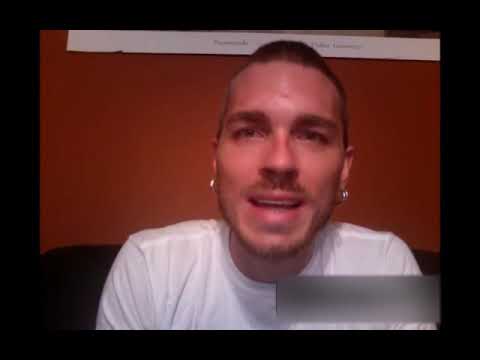
Dr. Peter Leone (who has appeared in the New York Times and NPR’s Talk of the Nation) stopped by our monthly herpes support group in Raleigh, NC, to give herpes facts and update us on herpes statistics. He gave so much clarity around all the horribly misunderstood herpes myths out there!